


How to choose your MTB tyres?

It is worth remembering that your MTB tyres are the only contact points between your MTB and the ground. Their role is to ensure good grip for traction, but they must also provide braking, steering, comfort, and efficiency for your bike.
Standards
- Adult wheel size: 26"; 27.5" MTB wheel; 27.5+; 29+ and 29" MTB wheel
- Fitting types depending on your MTB wheels:
- Tubetype (*Tubetype or inner tube in English): refers to a tyre designed to be fitted with an inner tube.
- Tubeless Ready: refers to a tyre that can be fitted without an inner tube provided a sealant is used. Be careful not to confuse it with a Tubeless* tyre.
- Tubeless: refers to a tyre designed to be fitted without an inner tube, with or without sealant. Be careful not to confuse it with a Tubeless Ready* tyre.
- The maximum tyre width permitted by your frame and/or fork
- Tyre beads: flexible or rigid
Tyre components
Beyond the technologies and options specific to each brand, there are several common points, namely:
The carcass of a tyre is made up of a weave of nylon threads. The number of threads over a given surface area is expressed in TPI. The higher this value, the more supple, comfortable and generally lightweight the tyre will be. The average value is between 60 and 100 TPI.
The beads of a tyre are the two hoops embedded in the tyre's bead that allow it to be firmly seated and held on the rim. They can be rigid (in steel or Kevlar) for a basic tyre or for disciplines that put tyres under extreme stress (Trial or DH/Freeride); or flexible (most often in polyamide) for a more comfortable, high-performance and lightweight tyre.
The hardness of the rubber compound, measured in Shore A, plays an important role. The softer it is (between 40a and 50a), the more grip the tyre will provide. Conversely, the harder it is (between 60a and 80a), the more rolling and robust the tyre will be. Some tyres combine rubber compounds of different hardnesses on the central tread and sidewalls to optimise performance.
Fitting types
Tubetype or inner tube
It remains the most classic fitment.
Tubeless Ready
Can be fitted without an inner tube provided a puncture sealant is used, as this tyre is not airtight as standard.
Tubeless
Designed to be fitted without an inner tube (even though it can accommodate one) and without sealant.
The advantages of a tubeless setup are numerous: the ability to run lower pressures to increase grip and comfort, no more pinch punctures and reduced risk of puncture by perforation with the addition of sealant, significant weight saving in the case of a Tubeless Ready setup.
Tyre width and the ETRTO standard
The same tyre model can come in several widths for a given wheel diameter. Simply put, the narrower a tyre, the better the efficiency, at the expense of comfort and handling ease. The latter will conversely be the advantages of a wider tyre.
ETRTO is an international measurement standard for tyres, expressed in millimetres, unlike the wheel diameter and width expressed in inches by manufacturers. This measurement consists of two values: the first specifies the tyre width in mm (e.g. 50 mm for 2.00" or 54 mm for 2.30") and the second is the fitting diameter (e.g. 559 for 26", 584 for 27.5" and 622 for 29"). Since inch dimensions can vary from one manufacturer to another, this internationally standardised ETRTO measurement is the most reliable.
Which tyre for my bike?
The choice of a front tyre is determined by the fork, whilst that for the rear wheel is determined by the frame. This information is provided by the manufacturers of these components. Make sure to check them in advance.
| 15 | 16 | 17 | 18 | 19 | 20 | 21 | 22 | 23 | 24 | 25 | 26 | 27 | 28 | 29 | 30 | 31 to 35 | 36 to 40 | 41 to 45 | 46 to 50 | 51 to 76 | 77 to 100 | |
|---|---|---|---|---|---|---|---|---|---|---|---|---|---|---|---|---|---|---|---|---|---|---|
| 20 to 21 | ||||||||||||||||||||||
| 22 to 24 | ||||||||||||||||||||||
| 25 to 27 | ||||||||||||||||||||||
| 28 | ||||||||||||||||||||||
| 29 to 31 | ||||||||||||||||||||||
| 32 to 34 | ||||||||||||||||||||||
| 35 to 36 | ||||||||||||||||||||||
| 37 to 39 | ||||||||||||||||||||||
| 40 to 41 | ||||||||||||||||||||||
| 42 to 43 | ||||||||||||||||||||||
| 44 to 46 | ||||||||||||||||||||||
| 47 to 49 | ||||||||||||||||||||||
| 50 to 51 | ||||||||||||||||||||||
| 52 to 54 | ||||||||||||||||||||||
| 55 to 57 | ||||||||||||||||||||||
| 58 to 59 | ||||||||||||||||||||||
| 60 to 61 | ||||||||||||||||||||||
| 62 to 63 | ||||||||||||||||||||||
| 64 to 65 | ||||||||||||||||||||||
| 66 to 71 | ||||||||||||||||||||||
| 72 to 83 | ||||||||||||||||||||||
| 84 to 99 | ||||||||||||||||||||||
| 100 to 113 | ||||||||||||||||||||||
| 114 to 132 |
Which tyre for my riding style?
Your MTB riding style as well as the terrain on which you will be riding will determine your tyre choice:
- Touring: For touring or leisure MTB riding, a section between 1.90" and 2.20", with a moderately dense and pronounced tread pattern for maximum versatility.
- Cross-Country: For Cross-Country rides on a hardtail or full-suspension MTB, a Tubeless Ready setup with a section between 2.00" and 2.30", and a very dense, low-profile tread pattern for a tyre with low rolling resistance and maximum performance.
- All-Mountain / Enduro: For All-Mountain or Enduro riding, a tubeless setup will be a bonus, between 2.30" and 2.60", with a moderately dense and pronounced tread pattern for versatility and grip.
- DH / Freeride: For DH/Freeride, an inner tube setup between 2.35" and 2.60" with a low density of knobs but highly pronounced for maximum grip.
Which tyre for the terrain conditions?
- Dry and fast-rolling: a high knob density with low-profile edges.
- Brittle and dry to slightly wet: a medium knob density with well-pronounced edges.
- Muddy: a low knob density with very pronounced edges
Découvrez tous nos conseils & Tutoriels
29-inch MTB tyres
-


HUTCHINSON TAIPAN 29x2.25 Hardskin Race Ripost XC Tubeless Ready Folding Tyre Black
Regular price 49,99 €Regular priceUnit price perRecommended price* : 64,99 €
-

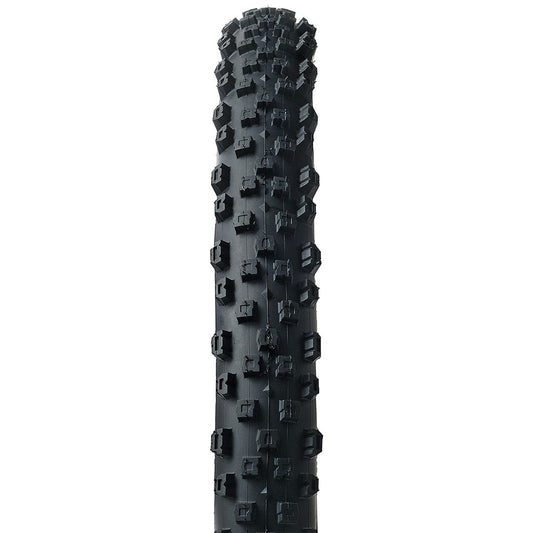
HUTCHINSON TORO 29x2.25 Hardskin Race Ripost XC Tubeless Ready Folding Black Tyre
Regular price 49,90 €Regular priceUnit price perRecommended price* : 64,99 €
-


SCHWALBE MAGIC MARY 29x2.60 ADDIX SOFT SUPERTRAIL Tubeless Ready Folding Tyre Black
Regular price 35,99 €Regular priceUnit price perRecommended price* : 68,90 €
-


SCHWALBE HANS DAMPF 29x2.60 ADDIX SPEEDGRIP SUPERTRAIL Tubeless Ready Folding Black Tyre
Regular price 34,99 €Regular priceUnit price perRecommended price* : 68,99 €
-


MAXXIS MINION DHR II 29x2.40 WT Exo 3C MaxxGrip Tubeless Ready Folding Black Tyre
Regular price 41,99 €Regular priceUnit price perRecommended price* : 85,00 €
-


Tyre MICHELIN WILD XC Performance Line 29x2.25 Tubeless Ready Folding
Regular price 25,99 €Regular priceUnit price perRecommended price* : 50,00 €


